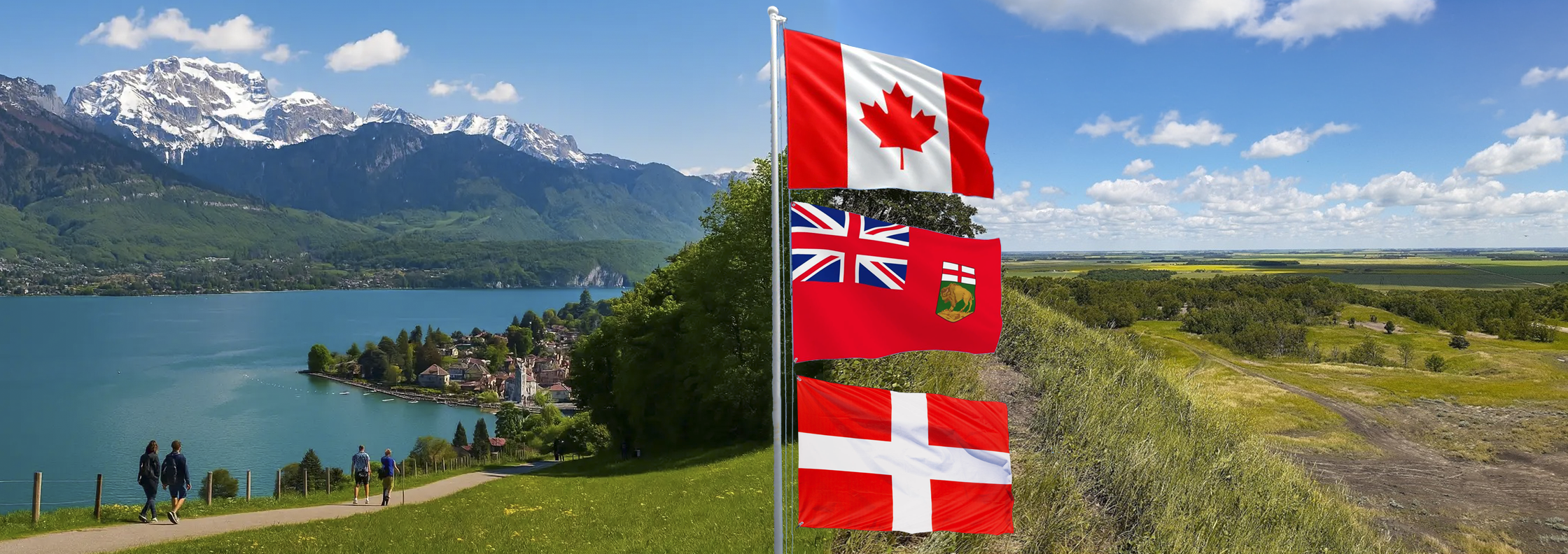

Les Savoyards du Manitoba
Préserver notre héritage, célébrer nos racines
Depuis la fin du XIXe siècle, des familles savoyardes ont quitté leurs vallées alpines pour s'établir dans les Prairies canadiennes, portant avec elles leurs traditions, leur foi et leur langue française.
Since the late 19th century, Savoyard families left their Alpine valleys to settle on the Canadian Prairies, carrying with them their traditions, faith, and language. Many of their descendants remain in Manitoba today. This association exists to honour that journey — and to find the families who are still here.
Mémoire Memory
Documenting the families, journeys and communities that shaped the Savoyard presence in Manitoba.
Patrimoine Heritage
Celebrating the culture, gastronomy, dialects and traditions of Savoy — kept alive across generations.
Communauté Community
Connecting Savoyards and their descendants across Manitoba, from Winnipeg to the Pembina Valley.

Nicolas Bernaz
Fondateur, Savoyards du Manitoba · Winnipeg, Canada
Haut-Savoyard installé à Winnipeg, Nicolas Bernaz a créé cette association pour retrouver les descendants des familles savoyardes établies au Manitoba depuis la fin du XIXe siècle.
Il est également fondateur d'Ethical Certified AI, une plateforme internationale de certification éthique de l'intelligence artificielle.
A Haute-Savoyard now based in Winnipeg, Nicolas Bernaz founded this association to reconnect descendants of Savoyard families who settled Manitoba in the late 19th century.
He is also the founder of Ethical Certified AI, an international platform for the ethical certification of artificial intelligence.
Histoire / History
Des Alpes aux Prairies · From the Alps to the PlainsLa présence savoyarde au Manitoba s'inscrit dans un mouvement migratoire plus large venu de France à la fin du XIXe siècle. Attirés par les terres abondantes des Prairies canadiennes et parfois poussés par le climat anticlérical de la Troisième République, des familles de toute la France ont traversé l'Atlantique pour s'établir dans la région de la Montagne Pembina.
The Dominion Lands Act of 1872 offered 160 acres to any settler for just ten dollars — an extraordinary opportunity for farming families whose land in France could no longer sustain them. Catholic clergy played a key role in channelling this migration, recruiting families from specific regions of France to settle in new Franco-Catholic parishes in Manitoba.
"La France est belle, nous nous y sommes trouvés comme chez nous, mais quand on met le pied sur notre terre Canadienne avec son beau ciel bleu, il y a quelque chose de plus que le chez soi ordinaire, c'est notre home."
— Joseph Deroche, Notre-Dame-de-Lourdes, 1970
Chronologie / Timeline
Patrimoine / Heritage
Traditions, culture et identité · Traditions, culture and identityLa Savoie — aujourd'hui partagée entre la Savoie (73) et la Haute-Savoie (74) — est une région alpine aux frontières de la France, de l'Italie et de la Suisse. Elle n'a rejoint la France qu'en 1860, après un référendum, ce qui lui confère une identité distincte : profondément catholique, montagnarde et multilingue.
Savoy only became part of France in 1860, giving it a distinct identity that Savoyard emigrants carried with them to the Prairies. The families who settled in Manitoba brought more than their names — they brought a culture, a faith, and a way of relating to land and community.
La foi catholique / Catholic faith
The Church was central to Savoyard life on both sides of the Atlantic. It organised the migration, built the first parishes, and anchored community identity across generations. Many Savoyard families left France specifically to preserve their faith and their children's Catholic education.
La terre / The land
For Savoyard farming families, land ownership was the ultimate aspiration. The Prairies offered what the Alps could not: abundant, affordable land. Families like the Augerts and Dompniers built farms at Notre-Dame-de-Lourdes that sustained multiple generations.
La langue française / The French language
French was carefully preserved across generations. Families gave private lessons at home, supported French-language newspapers, and maintained the language as both a cultural marker and a point of pride. "Ils parlent tous bien français et sont restés Français de cœur."
L'identité double / Dual identity
Savoyard settlers developed a dual belonging — Canadian by choice, Savoyard by heritage. Even third-generation descendants made pilgrimages to the Maurienne valley, feeling a "curious reaction" on touching their ancestors' soil. Canada was home. Savoy was the root.
Familles / Families
Reconnaissez-vous votre nom ? · Do you recognise your family name?Les Savoyards qui se sont établis au Manitoba venaient principalement de la vallée de la Maurienne et des départements alpins voisins. Si vous retrouvez un de ces noms dans votre arbre généalogique, nous voulons vous entendre.
The Savoyards who settled in Manitoba came primarily from the Maurienne valley and neighbouring Alpine areas. If you have one of these family names in your genealogy — or know someone who does — we want to hear from you.
Cette liste est incomplète. Contactez-nous pour ajouter votre famille. / This list is incomplete. Contact us to add your family.
Familles documentées / Documented families
Famille Augert
Originaires de Fontcouverte, vallée de la Maurienne (Savoie). Charles et Jean Augert arrivent à Notre-Dame-de-Lourdes en 1910, appelés par leur sœur Séraphine Dompnier. Profondément catholiques et conservateurs, ils quittent la France en partie à cause du climat anticlérical de la Troisième République.
Famille Dompnier
Séraphine Augert, de Fontcouverte, épouse Clément Dompnier et s'établit à Notre-Dame-de-Lourdes dès 1895. Ils tiennent le magasin général et invitent ensuite leurs frères à les rejoindre. Retournés en Haute-Savoie en 1921, ils maintiennent des liens épistolaires avec le Manitoba pendant des décennies.
Famille Picton
Jean-Louis Picton, de la vallée de la Maurienne, s'établit à Haywood (Manitoba) en 1905. Dans ses mémoires, il cite les lois anticléricales et la suppression de l'enseignement religieux comme raisons principales de son départ — "la vie sociale presque insupportable" sous la Troisième République.
Votre famille ? / Your family?
Nous cherchons à documenter toutes les familles savoyardes établies au Manitoba. Chaque témoignage enrichit notre mémoire collective. Contactez-nous avec les informations dont vous disposez sur vos ancêtres — noms, communes d'origine, dates d'arrivée, lieux d'établissement.
Adhésion / Join Us
Devenez membre · Become a memberL'association est ouverte à toute personne ayant des racines savoyardes, un intérêt pour le patrimoine savoyard au Manitoba, ou simplement un attachement à la francophonie canadienne.
The association is open to anyone with Savoyard roots, an interest in Savoyard heritage in Manitoba, or simply a connection to the French-speaking community of Canada. There are no membership fees, no committees to sit on, no obligations. You simply join a community that shares your interest in keeping this heritage alive.
Pas de cotisation. Pas d'obligations. Juste une communauté.
No dues. No obligations. Just community.
Pour rejoindre l'association, utilisez le formulaire de contact ci-dessous et indiquez vos origines savoyardes ou votre intérêt pour l'association. / To join, use the contact form below and tell us about your Savoyard origins or your interest in the association.
Témoignages / Testimonies
Souvenirs et connexions · Memories and connectionsDes personnes du monde entier partagent avec nous leurs souvenirs et leurs liens avec les familles savoyardes du Manitoba. Chaque témoignage est un fil qui relie les Alpes aux Prairies.
People from around the world share their memories and connections with Savoyard families in Manitoba. Each testimony is a thread linking the Alps to the Prairies.
Articles / Press & Documents
Documents et coupures de presse · Press clippings and documentsContact
Écrivez-nous · Write to usVous avez des ancêtres savoyards au Manitoba ? Vous souhaitez rejoindre l'association, partager des informations sur votre famille, ou proposer votre aide ? Écrivez-nous. / Do you have Savoyard ancestors in Manitoba? Would you like to join, share family information, or help build the association? Write to us.